01
Which way does north point on the page in Plan B?
Show explanation
Right. Follow the arrow to its head beside N. The arrow has turned with the plan. Up on this page is west, down is east and left is south.
Map reasoning · suggested ages 7–9
Right on the page
doesn’t always mean east.
Two plans can show the same park with different page positions. Start with the key and north arrow, then explain a direction.
Compare the plansOne park · same objects and positions
Plan B is Plan A turned a quarter turn clockwise. The places have not moved in the park. The symbols show positions, not exact sizes.
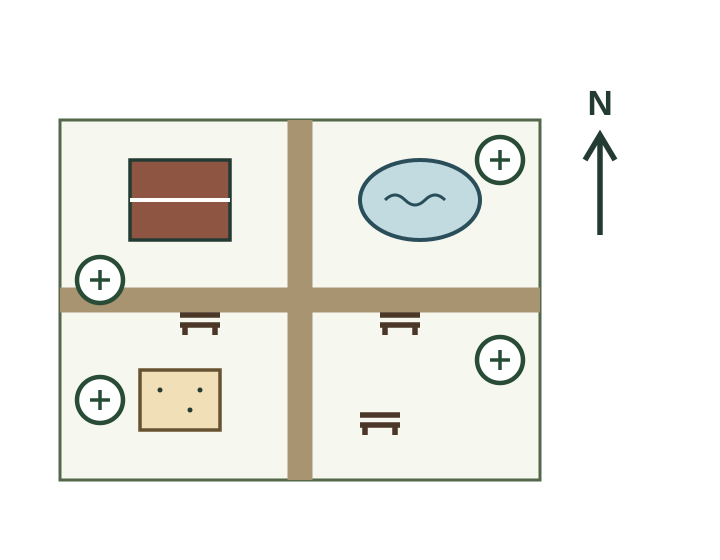
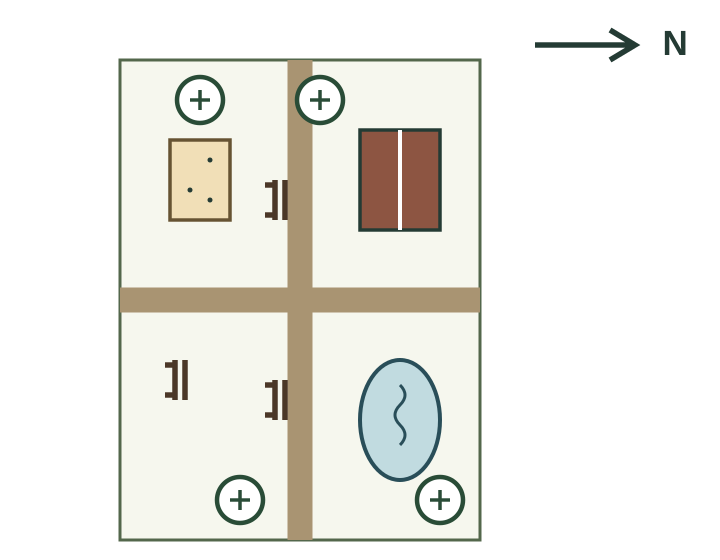
Colour is an extra clue. The hut is a rectangle with a line; the pond has a curved outline and wave; the sand area is a dotted rectangle; a tree is a circle with a cross; a bench has seat lines and legs; the wide lines are paths. A different map may use a different key.
Three direction questions
Point to the north arrow before answering. Start every comparison at the hut.
“On the page, the ___ is ___.
In the park, it is ___ of the hut.”
If it helps, sketch the plans on paper and turn your sketch until north points up. You can also open either plan at full size.
01
Right. Follow the arrow to its head beside N. The arrow has turned with the plan. Up on this page is west, down is east and left is south.
02
Still east. The pond is below the hut on the turned page. When north points right, east points down. Turning a plan changes its page positions; it does not change the compass direction between the park’s places.
03
No. It is south of the hut. On Plan B left is opposite the right-pointing north arrow, so left is south. The claim correctly describes a page position but gives it the wrong compass name. On Plan A you can check the same relationship: the sand area is below the hut, with north pointing up.
A fourth question · map purpose
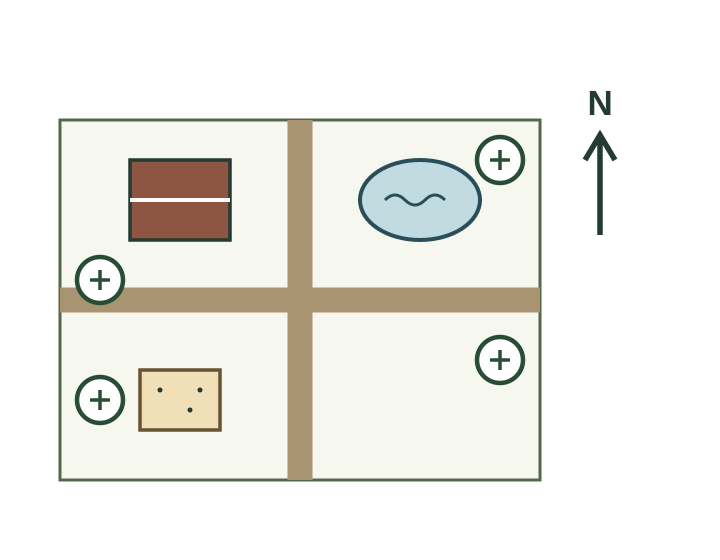
Plan D is a tree map of the same park. It shows every tree in this model, plus the hut, pond, sand area and paths for orientation.
No. Plan A shows three benches in this very park. Plan D omits them because it makes a different selection. A missing symbol does not by itself prove a missing object. Count the four tree symbols only because the instructions say this tree map shows every tree in the model.
Neither plan tells us whether someone is sitting on a bench now, whether a bench is in good condition or how long a path takes to walk.
For the adult
For a direction, ask the child to identify the starting object and the north arrow before naming the destination’s compass direction. Accept turning the paper or sketch as a useful strategy. “Down on the page” and “east of the hut” can describe the same relationship here.
A child who says “the park rotated” may mean the picture. Ask what has actually changed: the plan’s orientation, or the positions of the places relative to each other?
For an omission, ask what the instructions promise to show. A map intended to show all benches must include them. A tree map can leave them out deliberately. One unexplained missing symbol is not enough to choose between an error and a purposeful selection.
Finish with a new sentence about one of the plans. A partner names the plan and checks its evidence. These prompts support discussion; they are not a standardized assessment.
Continue on paper · paid PDF lesson
Map keys, compass directions
and rotated maps · ages 7–9.
Five activity sheets move from symbols and turned plans to purposeful selection, an explicitly faulty complete map and designing a map for finding seats. A separate check uses a different garden with north pointing left.
Four help cards and explained answers support the reasoning, including more than one correct drawing.
See previews and current price on TQContent overlap: the park, plans and selected direction/omission questions on this page repeat the paid English lesson. That lesson repeats our German “Ein Park. Mehrere Karten.” tasks and the English Tes adaptation. This page also draws on our German teaching article about this park. Owners should expect overlap. The free example above has all its answers here and needs no purchase.
This is a focused map-reasoning lesson. It does not teach eight-point compass directions, scale, grid references or real-world navigation.