Views and plans · ages 8–10
Compare the horizontal order of one fixed model from two viewpoints. Name where you are looking from before judging left and right.
Continue with the viewpoint exampleSpatial reasoning · suggested ages 8–10
The model stays still.
Our viewpoint changes.
“The tree is to the right of the house.” A useful answer starts with a question: where are you looking from?
Compare the two viewsChoose by the question you want to teach
Compare the horizontal order of one fixed model from two viewpoints. Name where you are looking from before judging left and right.
Continue with the viewpoint exampleTurn a park plan, follow its north arrow and explain why an omitted symbol does not prove an absent object. Know the four main compass directions first.
Try the park-map exampleMatch every detail of a written clue to a picture. Compare a sun and a moon, then one star and two, before choosing a numbered text.
Try the winter reading-trail excerptEach example includes all its answers. The full paper lessons are separate purchases, linked on the relevant page; one lesson does not require the other.
One fixed arrangement
The arrows show where the viewer looks. The plan is directly overhead; the model pictures are viewed slightly from above.
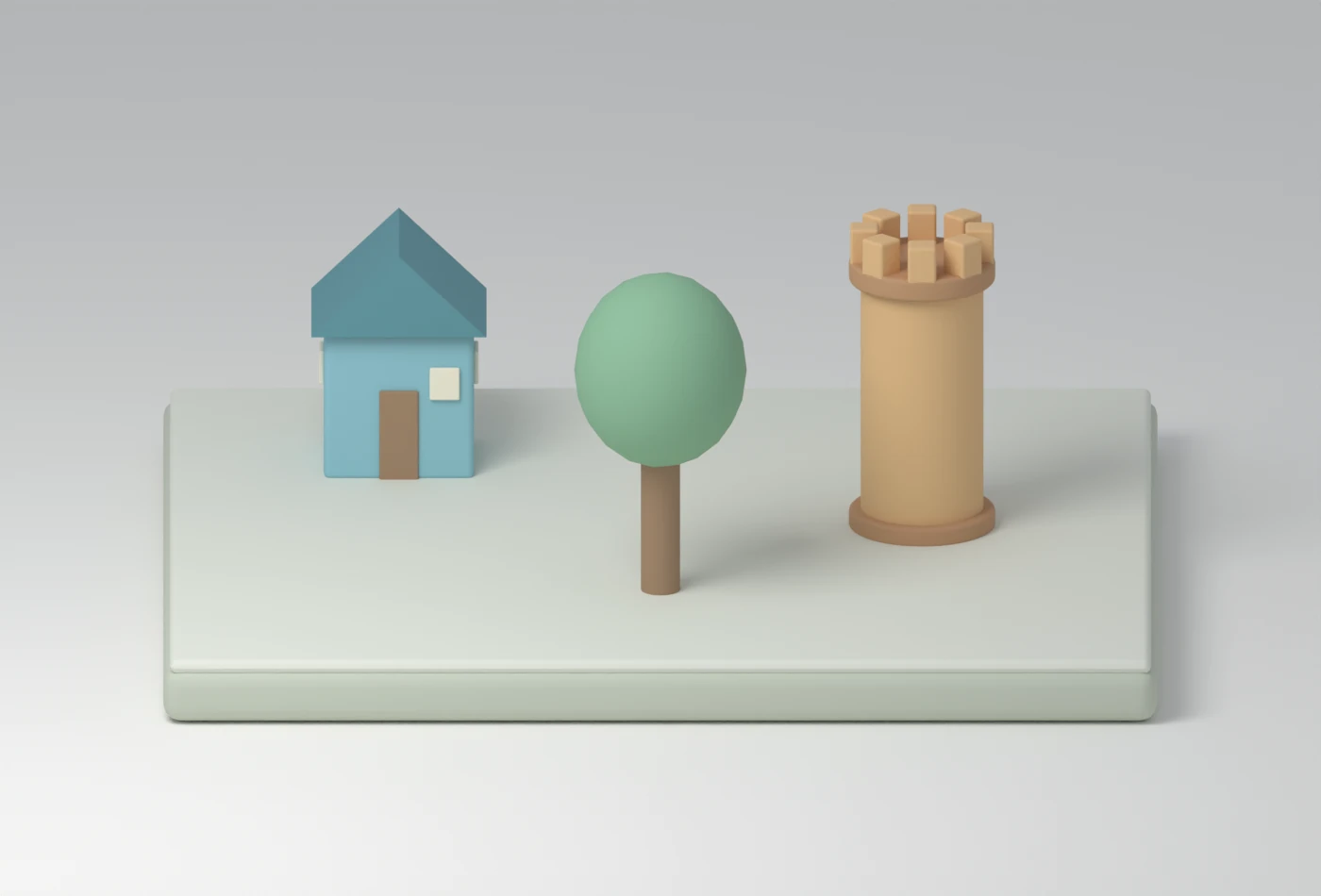
House · Tree · Tower
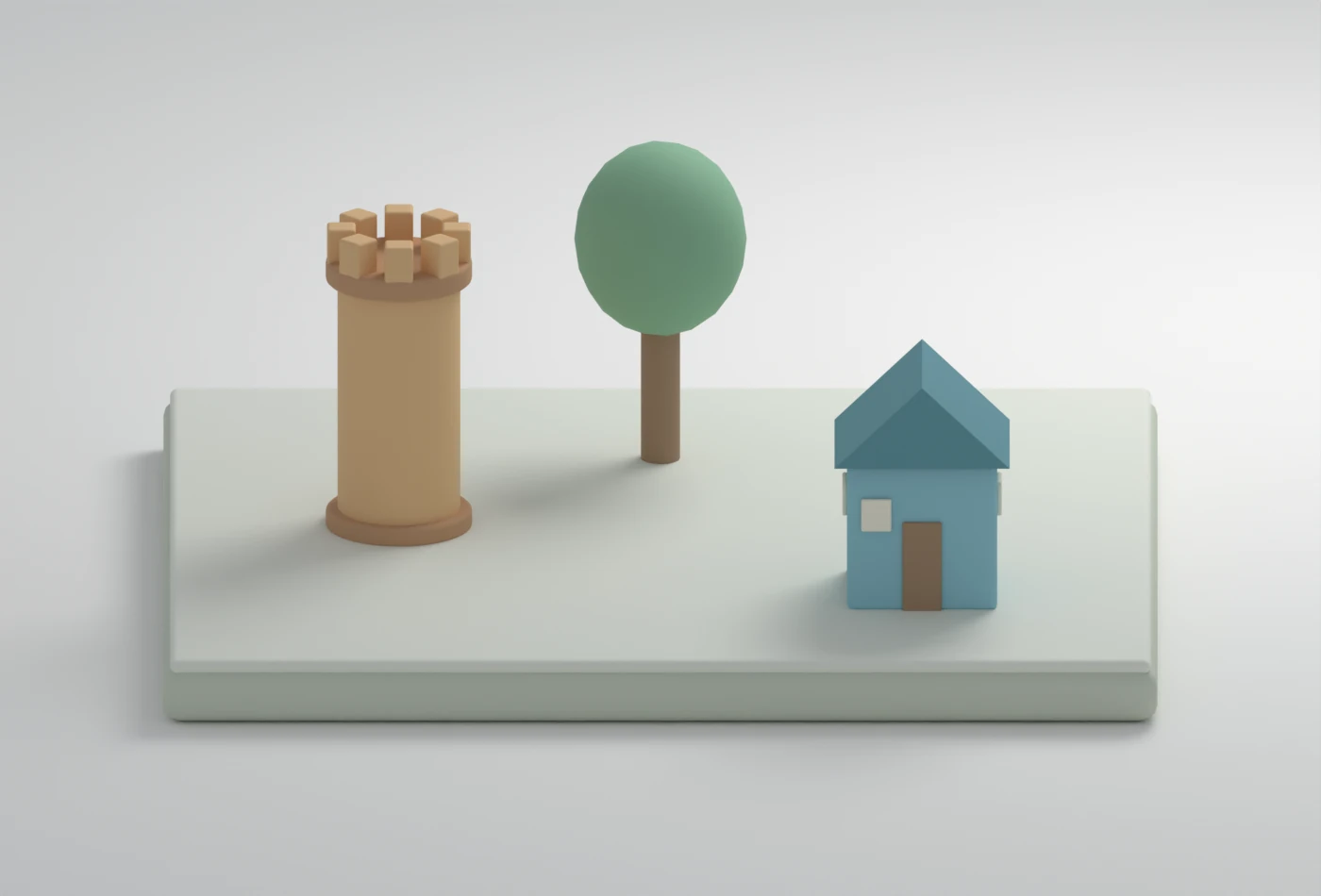
Tower · Tree · House
Here, “between” means the horizontal order in a view. The three objects do not lie on one straight line in the ground plan. Shape and labels identify each object; colour is an extra clue.
Three questions, with all answers
Before opening an explanation, say which viewpoint you used and point to the two objects you compared.
“From viewpoint ___, the ___ is to the left/right of the ___.”
01
Yes. From viewpoint 1 the order is house, tree, tower. The tree is to the right of the house. It is not the object furthest right: that is the tower. “To the right of” compares two objects.
02
No. From viewpoint 3 the order is tower, tree, house. The tower is to the left of the tree. A complete correction keeps the viewpoint in the sentence.
03
Yes. The outer objects change sides in the horizontal order, but the tree stays in the middle. This does not mean every spatial relationship stays the same.
Take the conversation further
Return to “The tree is to the right of the house.” Ask for two complete versions, one for each viewpoint. The version for viewpoint 1 is true; the version for viewpoint 3 is false. The original sentence needs a viewpoint before we can judge it for this model.
If a child needs support, let them turn the plan so the chosen viewpoint is at the bottom and its arrow points away from them. The page turns; the model’s objects keep the same places.
Changing viewpoint is more than flipping a photograph: different surfaces of the objects can become visible. This example compares the horizontal order, rather than claiming the complete pictures are mirror images.
Finish by asking for a new statement about one view. A partner first identifies the view, then checks the relation. Listen for the named objects and the deciding detail. The three questions support discussion; they are not a standardized assessment.
Continue on paper · paid PDF lesson
Views, plans and spatial reasoning
for ages 8–10.
Six activity sheets progress from matching views to checking statements, reconstructing a plan from two clues and finding more than one valid plan. A separate quick check uses a new arrangement.
Four help cards and three explained answer pages support checking the reasoning, including different correct drawings.
See previews and current price on TQContent overlap: this page uses the paid lesson’s model and selected relationships, including the tree between the house and tower. The English paid lesson repeats the tasks in our German “Standpunkte wechseln”. This page also adapts our German teaching article about the same model. Owners of those materials should expect that overlap.